This article contains affiliate links. We may earn a commission at no extra cost to you.
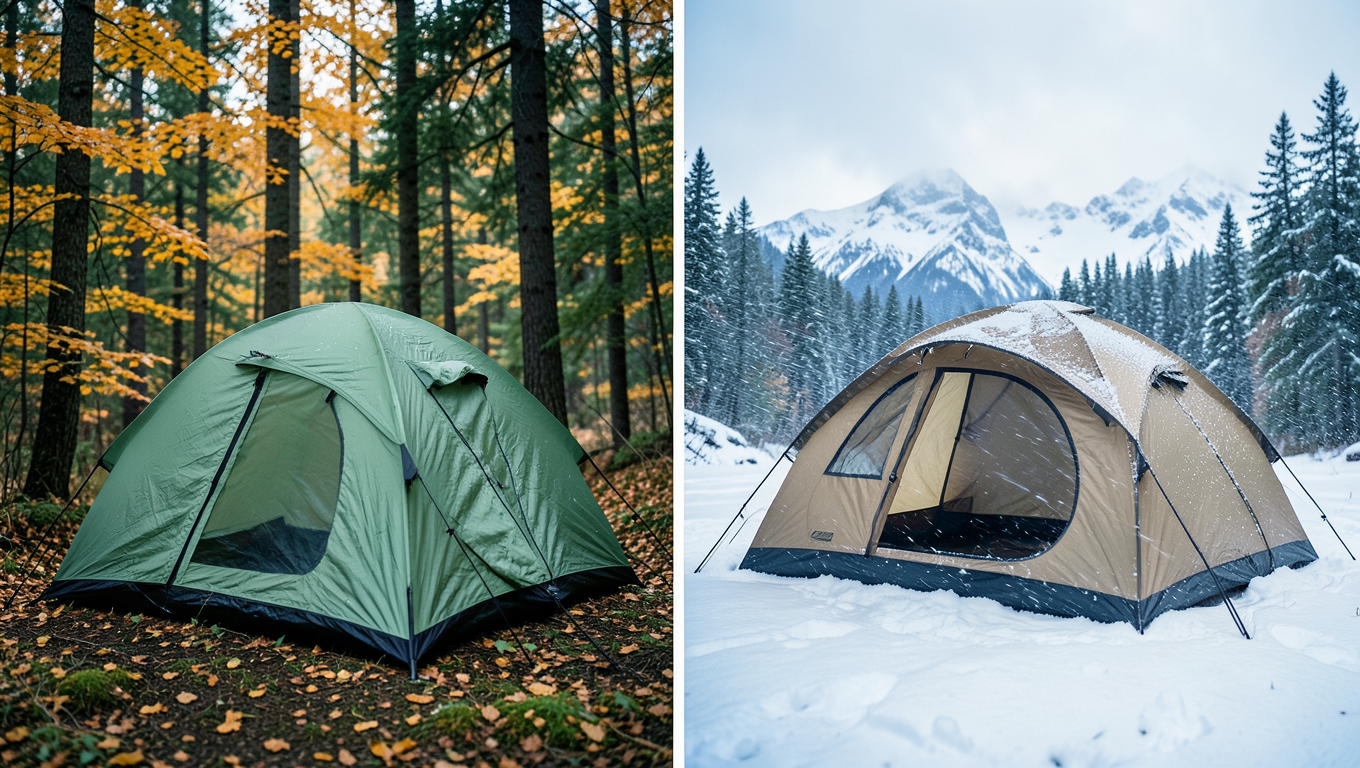
A 3-season tent handles spring, summer, and fall conditions—rain, wind, and moderate cold. A 4-season tent adds winter capability, designed to withstand heavy snow loads and high winds without collapsing. The difference isn’t just marketing: it’s in the pole structure, fabric weight, and ventilation design.
Most backpackers and campers need a 3-season tent. I’ve used mine in 20°F overnight temps, driving rain in the Cascades, and exposed ridgeline camps. A 4-season tent only makes sense if you’re camping above treeline in winter or in conditions where snow accumulation is a real threat.
Quick Comparison: 3-Season vs 4-Season Tents
| Feature | 3-Season Tent | 4-Season Tent |
|---|---|---|
| Weight | 3-5 lbs (2-person) | 5-8 lbs (2-person) |
| Pole Structure | 2-3 poles, flexible | 4+ poles, reinforced crossovers |
| Fabric | Lighter ripstop, more mesh | Heavier denier, minimal mesh |
| Ventilation | Large mesh panels, multiple vents | Small vents, solid fabric walls |
| Snow Load Capacity | Light dustings only | 6-12+ inches sustained |
| Wind Resistance | 30-40 mph gusts | 60+ mph sustained winds |
| Price Range | $200-$500 | $400-$800+ |
| Best For | Spring-fall camping, below treeline winter | Alpine winter, exposed high camps |
What 4-Season Tent Meaning Actually Covers
The term “4-season tent” specifically means winter-capable. It doesn’t mean you can comfortably use it year-round—in fact, a 4-season tent in July is miserable. The solid fabric walls that block spindrift also trap heat and moisture. I’ve woken up in a 4-season tent on a 60°F night with condensation dripping from the ceiling.
True 4-season tents have geodesic or semi-geodesic dome designs with four or more poles creating multiple crossover points. This distributes snow weight across the structure instead of letting it sag between two poles. The Mountain Hardwear Trango series uses this approach—I’ve seen one buried under 18 inches of overnight snow in the Sierras, and it held without needing to be cleared until morning.
Pole Structure and Snow Load
A 3-season tent typically uses two main poles in an X-pattern or a single hoop design. This works fine when precipitation slides off as rain or light snow. But wet, heavy snow accumulates in the spaces between poles, creating pressure points. I’ve had a 3-season tent’s ridgeline sag 8 inches under 4 inches of wet spring snow—not a collapse, but enough to press the fly against the mesh and reduce livable space by a third.
Four-season tents add crossing poles at multiple angles. The extra support points mean snow distributes more evenly. The steeper wall angles on most 4-season designs also help snow slide off rather than accumulate. You’re still brushing snow off periodically in heavy storms, but the tent maintains its shape under load.
Winter Tent vs Summer Tent: Ventilation Trade-offs
Three-season tents maximize airflow. Large mesh panels on the tent body allow moisture from breathing and wet gear to escape. Even with the rainfly fully deployed, vents at the peak and base keep air moving. This prevents the condensation buildup that soaks sleeping bags and gear.
Four-season tents sacrifice ventilation for warmth retention and wind protection. The tent body uses solid fabric instead of mesh, with small adjustable vents. This blocks spindrift (fine snow particles that penetrate mesh like dust) but traps moisture inside. On a winter trip in the Adirondacks at 15°F, I had frost coating the interior walls of my 4-season tent by morning—that’s moisture from two people breathing all night with nowhere to go.
The condensation issue is real but manageable. You wipe down walls in the morning, keep wet items in stuff sacks, and crack vents when possible. The trade-off is worth it when wind chill is -20°F and spindrift is blowing horizontally.
Fabric Weight and Durability
Three-season tents use 20-40 denier ripstop nylon or polyester. This keeps pack weight down—a 2-person 3-season tent averages 3.5 to 5 pounds. The fabric handles abrasion from tree branches and resists tears, but it’s not designed for sustained contact with ice or repeated brushing of heavy snow.
Four-season tents step up to 40-70 denier fabric, sometimes with reinforced stress points. The fly and floor are thicker to handle sharper ice crystals and the constant friction of clearing snow. My 4-season tent weighs 7.2 pounds for a 2-person model—that’s 3 pounds more than my 3-season tent with the same interior space. On a summer backpacking trip, those 3 pounds matter. On a winter approach where you’re on snowshoes or skis anyway, they don’t.
When You Actually Need a 4-Season Tent
I use my 3-season tent for about 90% of my camping, including winter trips below treeline where temps drop to 10°F. Trees block wind, and snow accumulation is gradual enough to brush off before bed. A 3-season tent with a solid rainfly and good staking handles these conditions fine.
You need a 4-season tent when:
- Camping above treeline in winter where sustained winds exceed 40 mph and snow accumulates continuously
- Mountaineering expeditions where you’re establishing high camps on exposed terrain
- Extended winter trips where a tent failure means serious danger, not just discomfort
- Locations with heavy, wet snow like coastal ranges where 6+ inches can fall overnight
If you’re car camping in winter, a 3-season tent with a good sleeping bag and pad is usually enough. If you’re hiking into the backcountry where weather can trap you for days, the 4-season tent’s extra margin matters.
Tent Seasonality: The 3.5-Season Category
Some manufacturers market “3.5-season” or “extended season” tents. These split the difference: stronger pole structures than pure 3-season designs, but more ventilation than full 4-season models. They handle early and late-season mountain trips where you might see snow, but not sustained winter conditions.
I’ve found these useful for spring skiing trips and fall hunts above 10,000 feet. They’re 1-2 pounds lighter than 4-season tents and ventilate better, but they have reinforced poles and steeper walls for moderate snow loads. The REI Co-op Arete series fits this category—not a true 4-season tent, but more capable than standard 3-season models.
Weight and Pack Size Reality Check
A 2-person 3-season tent packs down to about 6×18 inches and fits inside or strapped to a 50-60L backpack. A 4-season tent of the same capacity runs 8×20 inches and often rides outside the pack. If you’re splitting the tent with a partner (one carries the body, one carries poles and fly), this matters less. Solo, it affects your pack choice and load distribution.
The weight difference also compounds with other winter gear. You’re already carrying a warmer sleeping bag, insulated pad, more clothing layers, and extra fuel for melting snow. Adding 3 pounds of tent on top pushes many setups into the 40-50 pound base weight range before food and water. That’s manageable but not comfortable for long approaches.
Cost Considerations
Quality 3-season tents from established brands run $250-$500 for 2-person models. Four-season tents start at $400 and quickly reach $700-$800. The price jump reflects more complex pole systems, heavier-duty fabrics, and more reinforced construction throughout.
If you’re deciding between the two, rent a 4-season tent for a winter trip before buying. Many outdoor retailers and gear libraries rent them for $30-$50 per weekend. One trip will tell you whether you need the extra capability or if your 3-season tent with careful site selection does the job.
My Setup Approach
I own both. My 3-season tent gets used April through November and on below-treeline winter trips. It’s lighter, packs smaller, and ventilates better for the conditions I encounter most. My 4-season tent comes out for exposed winter camps, spring mountaineering trips, and any time I’m expecting sustained winds above 40 mph or heavy snow accumulation.
If I could only own one tent and did primarily 3-season camping with occasional winter trips in protected areas, I’d choose a 3-season tent and be more selective about winter campsites. If I regularly camped above treeline or in heavy snow zones, the 4-season tent would be essential, not optional.
Ready to dial in the rest of your camping setup? Grab our free camping gear planning checklist to make sure you’re not missing critical items for your next trip.
Frequently Asked Questions
Can you use a 4-season tent in summer?
You can, but it’s uncomfortable. Four-season tents trap heat and moisture because they’re designed to block wind and spindrift. In warm weather, you’ll wake up drenched in condensation even with vents open. If you own a 4-season tent and want to use it in summer, pitch it with the fly off when rain isn’t expected, but you’re still carrying extra weight for no benefit.
Will a 3-season tent work in winter?
It depends on where you’re camping. Below treeline with moderate snow and temps above 10°F, a 3-season tent works fine if you brush off snow accumulation before bed and stake it properly. Above treeline or in heavy snow zones, a 3-season tent risks collapse under snow load or damage from sustained high winds. I’ve used my 3-season tent in winter dozens of times, but always in protected sites.
What does the extra weight in a 4-season tent get you?
The additional 2-4 pounds comes from thicker fabric (40-70 denier vs 20-40), more poles (4+ vs 2-3), reinforced stress points, and heavier-duty stakes and guylines. This translates to withstanding 60+ mph winds, supporting 6-12 inches of snow accumulation, and resisting tears from ice and repeated snow clearing. If you don’t encounter those conditions, you’re carrying weight you don’t need.
How much snow can a 3-season tent handle?
Light, dry powder up to 2-3 inches is usually fine on a properly pitched 3-season tent. Wet, heavy snow becomes a problem at 3-4 inches, causing the fly to sag and potentially stressing pole connections. I clear my 3-season tent if accumulation reaches 2 inches to avoid any risk. Four-season tents can handle 6-12+ inches depending on design, though you should still clear heavy accumulation periodically.
Are 3.5-season tents worth it?
If you camp in shoulder seasons (early spring, late fall) in mountain environments, a 3.5-season tent makes sense. You get better snow handling than a pure 3-season tent without the weight and condensation issues of a full 4-season model. They’re ideal for hunters, spring skiers, and anyone who camps in conditions where snow is possible but not guaranteed. For pure summer use or hardcore winter mountaineering, stick with the specialized options.