Most camping gear fails because people buy what looks good online instead of what works in actual conditions. I’ve seen $400 tents collapse in moderate wind and $15 tarps handle everything a storm could throw at them. The difference isn’t always price—it’s understanding what you actually need for the environments you’ll camp in.
This camping gear guide breaks down how to evaluate equipment based on your specific camping style, climate, and experience level. You’ll learn to spot quality construction, avoid common gear mistakes, and build a kit that won’t leave you cold, wet, or frustrated.
Understanding Your Camping Style First
Before you buy a single piece of camping equipment, you need to define how you’ll actually camp. A car camper who drives to established campgrounds needs completely different gear than a backpacker counting ounces for a 50-mile trek.
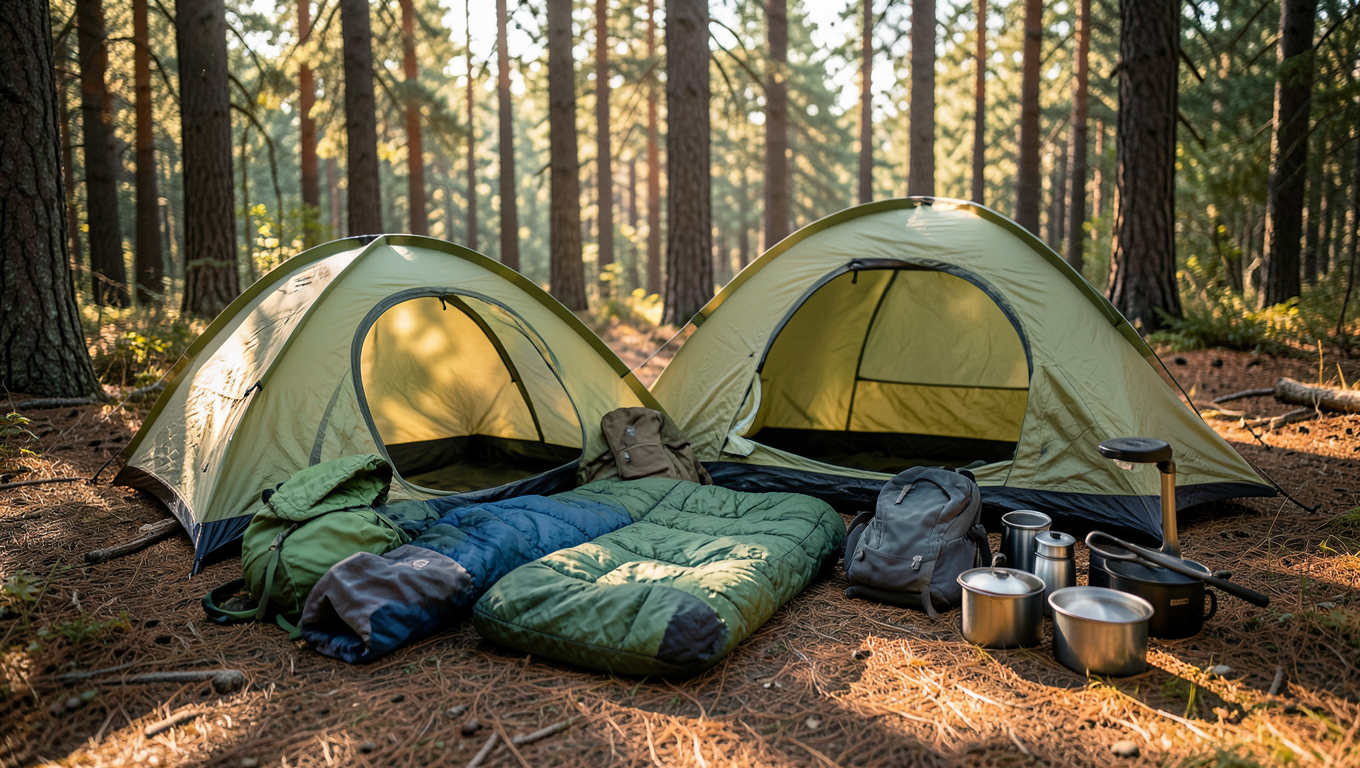
Car camping lets you prioritize comfort and durability over weight. You can bring a 10-pound canvas tent, cast iron cookware, and a full-size cooler because your vehicle does the carrying. Your gear choices focus on weather protection, comfort, and longevity rather than packability.
Backpacking forces weight and volume calculations for every item. That tent needs to weigh under 3 pounds. Your sleeping bag compresses to the size of a football. You’re looking at titanium cookware and dehydrated meals because every ounce counts over 10 miles.
Motorcycle camping sits in between—you have more capacity than backpacking but need weather-resistant gear that handles vibration and exposure. Canoe camping allows heavier gear but requires waterproof protection and manageable portage weights.
Most people camp in multiple styles throughout the year. Build your core kit for your most frequent camping type, then add specialized pieces as needed.
Shelter Systems: Beyond the Basic Tent
Your shelter is your most critical gear decision. Get it wrong and you’ll spend miserable nights fighting condensation, leaks, or inadequate space.
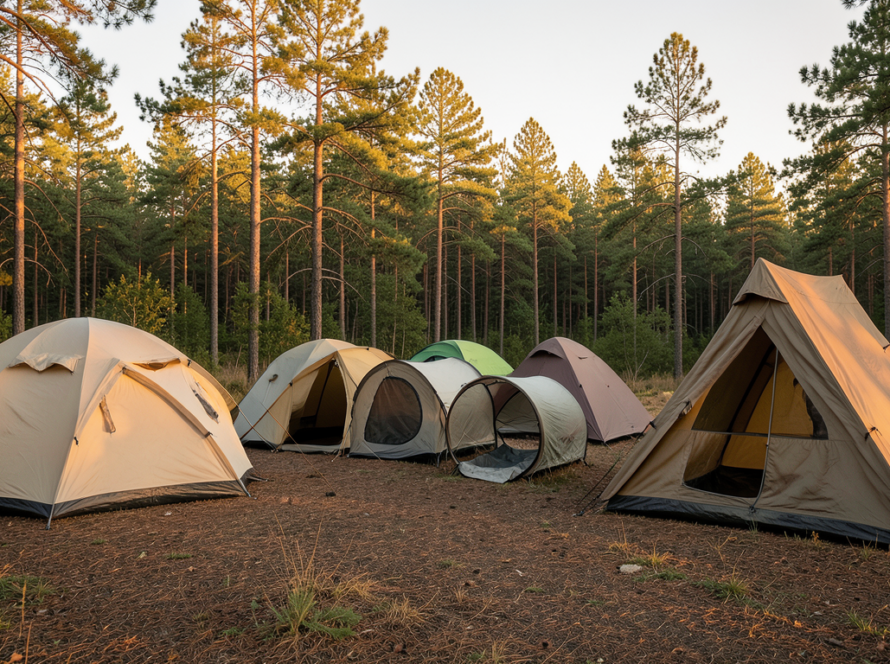
Three-season tents handle spring through fall in most US climates. They balance ventilation with weather protection, typically using mesh panels with rainfly coverage. Look for bathtub-style floors that extend 4-6 inches up the walls—anything less lets water seep in during heavy rain. I’ve tested dozens of tents, and floor seams are the most common failure point. Double-stitched, sealed seams are non-negotiable.
Freestanding tents use pole structures that hold shape without stakes. They’re easier to set up on rocky ground or wooden platforms, and you can pick them up and move them if you need to reposition. Non-freestanding tents (like most ultralight shelters) require stakes or trekking poles but typically weigh 30-50% less.
Four-season tents add structural strength for snow loads and reduce ventilation to retain heat. Unless you’re winter camping above treeline, they’re overkill and will cook you in summer conditions. I’ve seen people use four-season tents in July and wake up in a condensation swamp.
Tent capacity ratings assume you’re sleeping shoulder-to-shoulder with no gear inside. A “two-person” tent realistically fits one person with gear, or two people who really like each other. Add one person to the rating for comfortable space—buy a three-person tent for two people.
Alternative shelters work well for specific conditions. Hammocks with bug nets and rainflies excel in humid, buggy environments where ground moisture is constant. They require trees 12-15 feet apart and leave you vulnerable in exposed areas. Tarps offer maximum versatility and weight savings but demand practice to pitch properly and provide zero bug protection. Bivy sacks work for minimalist solo trips in dry climates but feel claustrophobic and handle condensation poorly.
Sleep Systems: The Temperature Rating Trap
Sleeping bags carry temperature ratings that mislead more than they inform. A bag rated to 20°F doesn’t mean you’ll be comfortable at 20°F—it means you’ll survive without hypothermia. Comfort ratings run 10-15°F warmer than survival ratings.
Down insulation offers the best warmth-to-weight ratio and compresses smaller than synthetics. Quality down (700-fill-power or higher) lofts better and lasts longer. The downside is literal—down loses all insulating value when wet and takes forever to dry. In humid climates or wet seasons, down becomes a liability unless you’re religious about keeping it dry.
Synthetic insulation (polyester fibers) retains warmth when damp and dries quickly. It weighs more and compresses less than down, but costs less and handles neglect better. For wet-climate camping or budget builds, synthetic makes sense.
Sleeping bag shapes affect warmth and comfort. Mummy bags taper at the feet and cinch around the head, minimizing air space for maximum warmth and minimum weight. Rectangular bags offer more room to move but let heat escape. Semi-rectangular bags split the difference.
Quilts eliminate the back insulation that compresses under your weight anyway. They’re lighter and less restrictive than mummy bags but require proper pad attachment to prevent drafts. I switched to quilts for three-season backpacking and won’t go back—the weight savings and freedom of movement are worth the learning curve.
Sleeping pads matter as much as bags. Cold ground conducts heat away from your body faster than cold air. R-value measures insulation—you need R-3 minimum for three-season camping, R-5+ for winter. Closed-cell foam pads (like Ridgerest) are bulletproof and cheap but bulky. Inflatable pads pack smaller and sleep more comfortably but can puncture. I carry both—foam as a backup and primary sit pad, inflatable for sleeping.
Cooking Systems: Match Fuel to Conditions
Camp stoves vary wildly in efficiency, weight, and fuel availability. Your choice depends on group size, trip length, and where you’re camping.
Canister stoves (isobutane-propane mix) thread onto pressurized fuel canisters. They’re clean, easy to use, and simmer well for actual cooking. Performance drops below 40°F as pressure decreases. Partially used canisters are awkward to pack, and you can’t fly with them. They’re my default for three-season trips under a week.
Liquid fuel stoves (white gas/Coleman fuel) perform consistently in cold weather and high altitude. They require priming and maintenance but let you see exactly how much fuel remains. MSR WhisperLite has been the standard for 30+ years because it works. Heavier than canister systems but more reliable in harsh conditions.
Alcohol stoves weigh almost nothing and cost under $20 to build yourself. Fuel is available at any hardware store. They’re slow, provide no simmer control, and struggle in wind, but for solo ultralight trips where you’re just boiling water, they’re hard to beat.
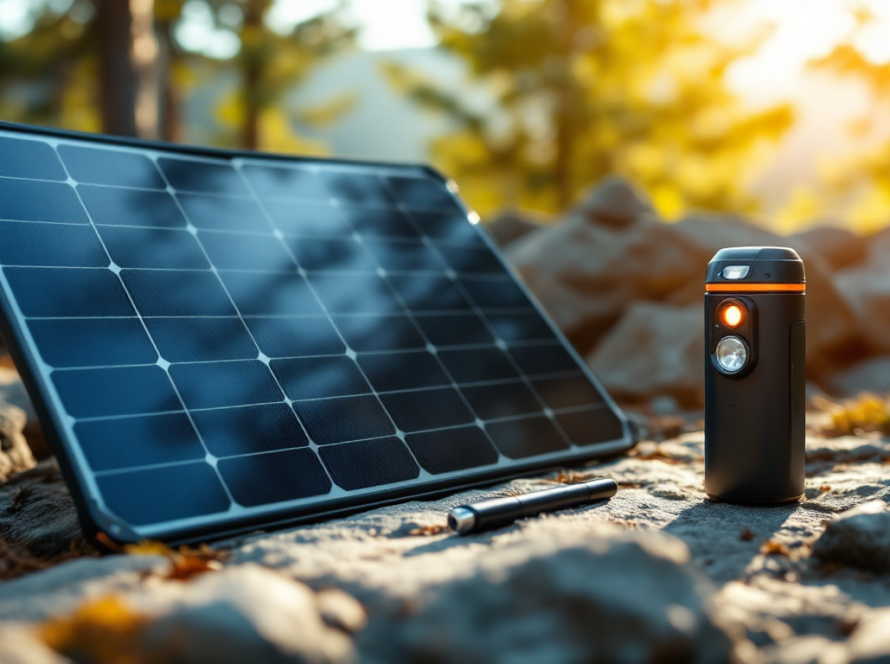
Wood-burning stoves (like BioLite or Solo Stove) eliminate fuel weight entirely. You’re gathering sticks instead of carrying fuel. They’re great for extended trips in forested areas with abundant deadfall. Useless above treeline or in areas with fire restrictions. Expect a learning curve and sooty cookware.
Fuel consumption varies by stove efficiency and cooking style. Plan 4-6 ounces of canister fuel per person per day for boiling water. Double that if you’re simmering meals. White gas runs about 2-3 ounces per person per day. Always carry 25% more fuel than you calculate—cold weather, wind, and inefficient cooking drain fuel faster than lab conditions suggest.
Water Treatment: Beyond Boiling
Untreated water carries protozoa (Giardia, Cryptosporidium), bacteria (E. coli, Salmonella), and viruses (Norovirus, Hepatitis A). Treatment method depends on what you’re protecting against and how much water you need.
Filters use physical barriers (0.2-micron pores) to remove protozoa and bacteria. They don’t remove viruses, which are smaller than filter pores. In US and Canadian backcountry, viruses are rare enough that filters provide adequate protection. Squeeze filters (Sawyer, Katadyn BeFree) are light and fast but require clean water sources—silt clogs them. Pump filters (MSR Guardian) handle silty water and last longer but weigh more.
Chemical treatment (iodine, chlorine dioxide) kills everything including viruses. Aquamira and Potable Aqua are proven systems. Treatment takes 30 minutes to 4 hours depending on water temperature and chemical type. They add taste, though neutralizer tablets help. Cheap, light, and effective for clear water sources.
UV purifiers (SteriPEN) use ultraviolet light to destroy microorganism DNA. They’re fast (90 seconds per liter), handle viruses, and add no taste. They require batteries, don’t work in silty water, and break if you drop them on rocks. Good for international travel where viral contamination is more common.
Boiling kills everything. One minute at a rolling boil is sufficient below 6,500 feet elevation. Add one minute for each additional 1,000 feet. Fuel consumption makes this impractical as your primary method, but it’s the ultimate backup when other systems fail.
I run a two-stage system: Sawyer Squeeze for daily use, Aquamira as backup. The filter handles volume quickly, the chemicals provide insurance if the filter breaks or I need to treat questionable water.
Clothing Layers: The System That Actually Works
Cotton kills. That’s not hyperbole—wet cotton against your skin in cold weather causes hypothermia faster than being naked. Every clothing piece you bring should be synthetic or wool.
Base layers sit against skin and manage moisture. Merino wool regulates temperature, resists odor, and stays warm when damp. Synthetic (polyester, nylon) dries faster and costs less but gets rank after a day. Weight matters—lightweight (150 gsm) for active use, midweight (200 gsm) for cold weather, heavyweight (250+ gsm) for stationary winter camping.
Mid layers provide insulation. Fleece is affordable, dries quickly, and breathes well but offers no wind resistance. Synthetic puffy jackets (PrimaLoft, Climashield) insulate when wet and compress reasonably. Down jackets provide maximum warmth for minimum weight but fail when damp. I carry a fleece for active insulation and a down jacket for camp.
Outer layers block wind and precipitation. Soft shells stretch and breathe but aren’t fully waterproof—they’re for active use in light precipitation. Hard shells (Gore-Tex, eVent) are fully waterproof and windproof but don’t breathe as well as marketing claims. You’ll get wet from sweat if you hike hard in a hard shell. Rain jackets should have pit zips for ventilation.
The layer system works because you adjust insulation by adding or removing pieces. You should feel slightly cool when you start hiking—you’ll warm up in 10 minutes. If you’re comfortable standing still, you’ll overheat while moving.
Packs: Capacity and Fit Over Features
Pack volume is measured in liters. Weekend trips need 40-50L, week-long trips need 60-70L, extended expeditions need 80L+. Bigger isn’t better—excess space encourages bringing unnecessary gear.
Internal frame packs dominate modern camping. The frame (aluminum stays or plastic sheet) transfers weight to your hips, which handle loads better than shoulders. Hip belts should sit on your iliac crest (top of your hip bones), not your waist. Shoulder straps should pull the pack close to your back without digging into your shoulders.
Torso length matters more than height. A 6’2″ person might have a shorter torso than a 5’8″ person. Most quality packs come in multiple torso lengths or have adjustable suspension systems. An ill-fitting pack will hurt regardless of how much you paid.
Load lifters (straps connecting the top of shoulder straps to the pack) pull the top of the pack toward your shoulders, keeping weight close to your body. They should angle 45 degrees back from the pack when properly adjusted. If they’re horizontal or angled down, your torso length is wrong.
Features like external pockets, hydration sleeves, and gear loops are nice but secondary to fit and capacity. I’d rather have a perfectly fitted basic pack than a poorly fitted pack with every feature.
Lighting: Headlamps and Backup
Headlamps free your hands for camp tasks, navigation, and emergencies. Lumens measure brightness—200 lumens handles most camping needs, 400+ for trail running or technical terrain. Runtime matters more than maximum brightness. A lamp that burns 1000 lumens for 30 minutes is less useful than one that provides 200 lumens for 20 hours.
Beam patterns vary. Spot beams throw light far for navigation. Flood beams spread light wide for camp tasks. Most modern headlamps combine both. Red light preserves night vision and doesn’t attract insects as aggressively as white light.
Battery type affects weight and convenience. Rechargeable lithium batteries (built-in USB charging) eliminate disposable waste but leave you stranded if they die without power access. AAA batteries are heavier but available everywhere and easily carried as spares. I use rechargeable for weekend trips, AAA-powered for longer expeditions.
Always carry backup lighting. A small backup headlamp or flashlight weighs an ounce and prevents a bad situation from becoming dangerous. I’ve seen people navigate by phone light after their primary headlamp died—it works until your phone battery dies, then you’re in the dark.
Navigation: When Technology Fails
GPS devices and phone apps are excellent tools until they’re not. Batteries die, screens break, satellites lose signal in canyons. Paper maps and compasses don’t fail.
USGS topographic maps show terrain features, water sources, and elevation changes. 1:24,000 scale (7.5-minute quads) provides the most detail for hiking. Waterproof paper or map cases protect against rain. Mark your planned route before you leave.
Compasses need no batteries and work anywhere. Baseplate compasses with declination adjustment are standard for land navigation. Declination (the difference between true north and magnetic north) varies by location—in Maine it’s 15°W, in Washington it’s 15°E. Ignore declination and you’ll be hundreds of yards off course after a mile.
Learn to triangulate your position using terrain features and compass bearings before you need to. Navigation skills deteriorate without practice. I run navigation exercises on day hikes to stay sharp.
GPS devices (Garmin inReach, Zoleo) that include satellite communication are worth considering for remote areas. Two-way messaging and SOS functions provide safety backup beyond navigation. They require subscription fees but potentially save your life.
First Aid and Emergency Gear
Pre-made first aid kits contain items you’ll never use and omit things you need. Build your own based on trip length, group size, and your medical training.
Core items for any kit: adhesive bandages in multiple sizes, gauze pads, medical tape, antibiotic ointment, blister treatment (moleskin or Leukotape), pain relievers (ibuprofen and acetaminophen), antihistamines, tweezers, and any personal medications. Add a SAM splint and elastic bandage for sprains. Include a CPR mask if you’re trained.
Blister prevention beats blister treatment. Tape hot spots (areas of friction) before they become blisters. Leukotape sticks better than moleskin and stays on through sweat and water. I tape my heels and pinky toes preventively on long hikes.
Emergency shelter weighs ounces and saves lives. A simple emergency bivy (reflective plastic bag) retains body heat if you’re stuck overnight. SOL Emergency Bivvy weighs 3.5 ounces. Space blankets are cheaper but tear easily.
Fire starting deserves redundancy. Carry three methods: lighter, waterproof matches, and ferro rod. Store them separately so losing your pack doesn’t mean losing all fire-starting ability. Include tinder (cotton balls soaked in petroleum jelly, commercial fire starters) that lights even when damp.
How to Choose Camping Gear: The Decision Framework
Start with the essentials: shelter, sleep system, water treatment, and lighting. These four categories keep you alive and reasonably comfortable. Everything else is optimization.
Buy quality where it matters. Your tent, sleeping bag, and pack take the most abuse and have the biggest impact on comfort. Spending an extra $100 on a tent that doesn’t leak is cheaper than replacing a $150 tent that fails after one season. I’ve owned the same MSR tent for 8 years—the per-trip cost is negligible.
Go cheap on consumables and easily replaced items. Fuel canisters, water treatment chemicals, and basic cookware don’t need premium versions. A $15 aluminum pot boils water as well as a $60 titanium pot—it just weighs more.
Rent or borrow before you buy. REI and local outfitters rent camping equipment. Test gear on a weekend trip before committing to a purchase. You’ll learn what features matter to you and what’s marketing hype.
Weight matters more as trip difficulty increases. Car camping tolerates heavy, durable gear. Backpacking demands ruthless weight evaluation. Calculate your base weight (everything except food, water, and fuel). Under 15 pounds is lightweight, under 10 pounds is ultralight. Most beginners start around 25-30 pounds and optimize from there.
Durability trades against weight. Ultralight gear uses thinner materials that wear faster. A 7-ounce tent made from 15-denier fabric tears more easily than a 3-pound tent with 70-denier fabric. Match durability to your use—weekend warriors can accept more fragility than thru-hikers covering 2,000 miles.
Buy for the worst conditions you’ll encounter, not average conditions. If you camp in rain once per season, you still need waterproof gear. If you camp below freezing twice per year, your sleeping bag needs to handle it. Gear that works in good weather is called “summer clothing.”
Gear Maintenance: Making Equipment Last
Clean gear after every trip. Dirt and body oils degrade fabrics and insulation. Tents should be set up to dry completely before storage—mildew ruins waterproof coatings. Sleeping bags need to be stored loosely (not compressed) so insulation maintains loft. I keep mine in a large cotton storage sack.
Reapply waterproofing annually. DWR (durable water repellent) coatings wear off with use and washing. When water stops beading on your rain jacket, it needs retreatment. Nikwax and Granger’s make spray-on and wash-in treatments.
Inspect gear before trips, not during them. Check tent seams for separation, sleeping pad valves for leaks, stove connections for cracks. Finding problems at home means easy fixes. Finding them in the backcountry means improvisation or trip failure.
Repair immediately. Small tears become big tears. A $5 repair patch applied today prevents a $200 replacement next month. Carry repair supplies: duct tape, tenacious tape for fabrics, spare cord, and safety pins.
Building Your Kit Over Time
You don’t need everything immediately. Start with borrowed or budget gear for your first few trips. Identify what works and what frustrates you, then upgrade strategically.
Most people replace their pack first—it’s the piece that causes the most immediate discomfort when wrong. Then sleeping system, because cold nights end trips early. Then shelter, as you learn what conditions you actually camp in.
Used gear markets (REI Used Gear, GearTrade, local Facebook groups) offer quality equipment at 40-60% off retail. Inspect carefully for damage, but most camping gear lasts decades with proper care.
Watch for end-of-season sales. Camping gear goes on clearance in September and October as retailers make room for winter inventory. Previous year’s models are functionally identical to current models but cost 30-50% less.
Avoid the upgrade trap. New gear is fun, but your 5-year-old sleeping bag that still lofts properly doesn’t need replacing because a new model weighs 3 ounces less. Upgrade when gear fails or when you’ve genuinely outgrown its capabilities.
Want a structured approach to building your camping kit? Download our free camping gear planning checklist that walks you through essential items by trip type and season.
Frequently Asked Questions
How much should I spend on camping gear as a beginner?
Budget $400-600 for a basic kit covering shelter, sleep system, pack, and essentials. This gets you functional gear that won’t fail on your first trip. You can start cheaper with borrowed items or used gear, but expect to replace budget equipment within a season or two. Invest more in your sleeping bag and tent—these have the biggest impact on comfort and safety. You can economize on cookware, lighting, and accessories without compromising performance.
What’s the difference between 3-season and 4-season camping gear?
Three-season gear handles spring, summer, and fall in most climates—roughly 20°F to 90°F. It balances weather protection with ventilation and weighs less. Four-season gear adds structural strength for snow loads, reduces ventilation to retain heat, and uses more durable materials for harsh conditions. Unless you’re winter camping in mountains or northern latitudes, 3-season gear is more versatile. Four-season tents become sweltering saunas in summer, and winter sleeping bags are overkill for temperatures above freezing.
How do I know if my camping gear fits properly?
For packs, the hip belt should rest on your hip bones (iliac crest), not your waist, with shoulder straps pulling the pack close without digging in. Load lifters should angle 45 degrees back from the pack. For sleeping bags, you should be able to move your feet and knees without stretching the fabric tight—too snug and you’ll compress insulation. Sleeping pads should extend from shoulders to hips minimum, full length for side sleepers. Try gear at home before your trip—discomfort in your living room means misery in the backcountry.
Can I use camping gear in different seasons?
Yes, with layering and smart choices. A 30°F sleeping bag works in summer if you don’t fully zip it. Add a liner or wear clothes to extend it into colder weather. Three-season tents handle light snow if you brush accumulation off regularly. The key is understanding your gear’s limits and having backup plans. I use the same tent year-round but swap sleeping bags and pads based on temperature. This approach saves money and storage space compared to maintaining separate seasonal kits.
What camping gear should I replace most often?
Water filters need replacement after 1,000-10,000 liters depending on model—track your usage. Stove fuel obviously runs out. Tent waterproofing degrades with UV exposure and needs reapplication every 1-2 years. Sleeping pad glue can fail after 5-7 years even with careful use. Everything else should last 10+ years with proper maintenance. If you’re replacing gear more frequently, you’re either using it extremely hard or not maintaining it properly. The exception is upgrading as you learn what works for your camping style—that’s normal progression, not replacement.