This article contains affiliate links. We may earn a commission at no extra cost to you.
Clean drinking water separates a manageable outdoor situation from a medical emergency. I’ve tested every major water purification method across desert springs, alpine lakes, and questionable creek water in the Appalachians. Each approach has specific strengths and critical limitations you need to understand before you’re staring at a murky water source with empty bottles.
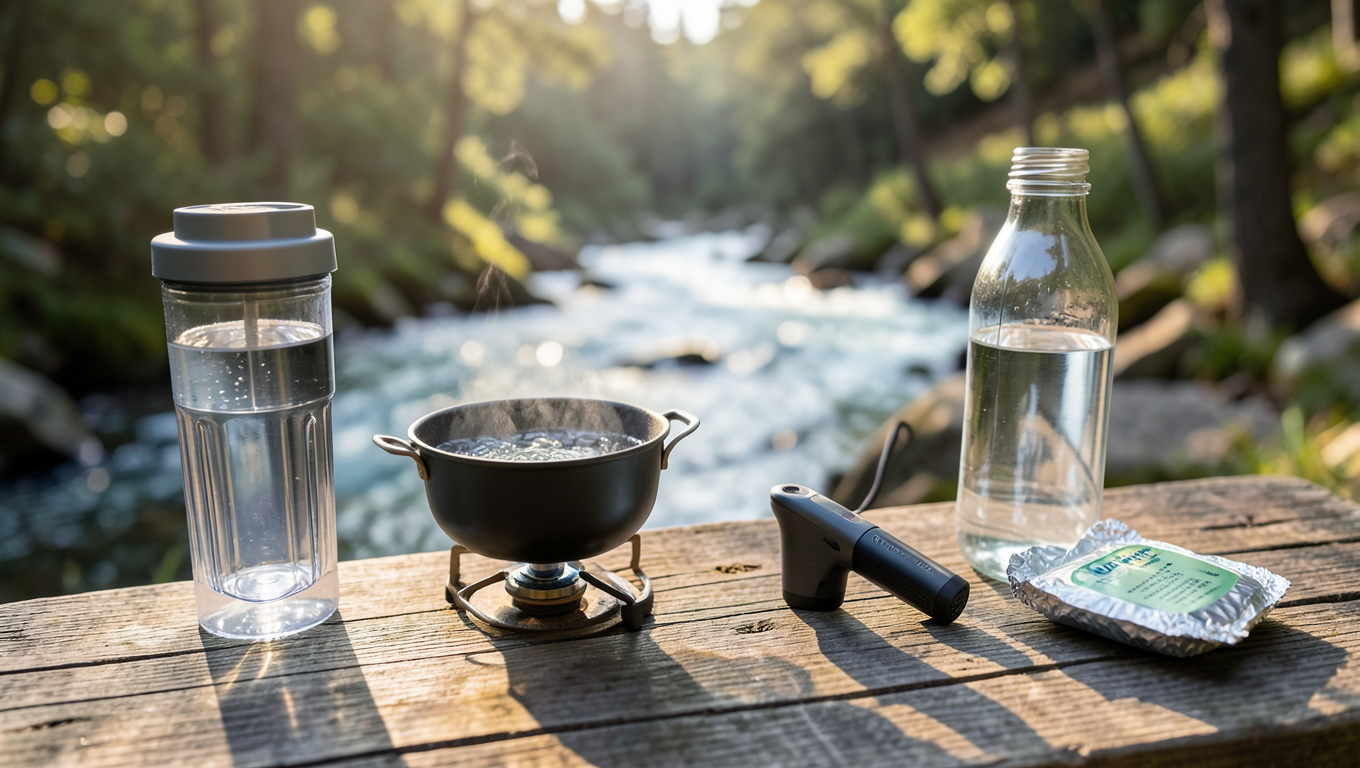
Quick Comparison: Water Purification Methods
| Method | Removes Bacteria | Removes Viruses | Removes Protozoa | Removes Chemicals | Time Required | Weight (typical) | Cost Range |
|---|---|---|---|---|---|---|---|
| Boiling | Yes | Yes | Yes | No | 5-10 min | 0 oz (stove varies) | $0 |
| Pump/Gravity Filters | Yes | No* | Yes | Some models | 1-5 min/liter | 5-20 oz | $30-$400 |
| Squeeze Filters | Yes | No* | Yes | No | 30 sec/liter | 2-3 oz | $20-$45 |
| Chemical Tablets | Yes | Yes | Chlorine dioxide only | No | 30 min-4 hours | 1-2 oz | $15-$20/50 tablets |
| UV Light | Yes | Yes | Yes | No | 60-90 sec | 4-5 oz | $80-$130 |
*Most filters don’t remove viruses unless specifically rated as purifiers (0.02 micron or smaller pore size)
Filtration: Mechanical Water Treatment
Filters physically block contaminants using ceramic, hollow fiber, or activated carbon media. The pore size determines what gets stopped—0.2 microns is standard for bacteria and protozoa, while 0.02 microns (purifiers) catch viruses.
I’ve run a Sawyer Squeeze through approximately 1,500 liters over three years. The hollow fiber membrane handles sediment-heavy water better than I expected, though flow rate drops noticeably after 500 liters even with backflushing. Weight matters on long trips—at 2 ounces, it disappears in your pack compared to a 16-ounce pump filter.
Pump filters excel when you need to fill large volumes quickly or pull from shallow sources. Gravity filters work best at camp when you can hang a reservoir and let physics do the work while you set up your tent. I’ve filled 10 liters in 15 minutes using a Platypus GravityWorks without touching it once.
Filter Limitations You Need to Know
Standard filters don’t remove viruses. In North American backcountry, viral contamination is rare enough that most hikers accept this risk. If you’re traveling internationally or treating water near human waste, you need a purifier-rated filter or a secondary treatment method.
Freezing destroys hollow fiber filters permanently. I learned this the hard way at 11,000 feet when temperatures dropped unexpectedly. Now I sleep with my filter in my sleeping bag during shoulder season trips.
Activated carbon elements remove some chemicals and improve taste, but they don’t eliminate pesticides, heavy metals, or industrial contaminants. If you’re filtering agricultural runoff or water downstream from mining operations, filtration alone isn’t sufficient.
Boiling Water: The Universal Baseline
Boiling kills everything—bacteria, viruses, protozoa, and parasites. The CDC confirms that a rolling boil at sea level for one minute achieves complete sterilization. Above 6,500 feet elevation, boil for three minutes to account for lower boiling temperatures.
I’ve relied on boiling during week-long canoe trips where weight limits don’t apply and fuel is abundant. It’s foolproof if you have time and fire capacity. The actual process takes longer than most people calculate: 3-4 minutes to reach a rolling boil, plus the boil time, plus cooling before you can drink. Budget 10 minutes minimum per liter.
Fuel consumption adds up. Boiling one liter requires approximately 30 grams of white gas or 15 grams of isobutane. On a five-day trip drinking three liters daily, you’d burn through 225 grams of fuel just for water treatment—that’s nearly an 8-ounce canister.
When Boiling Makes Sense
Base camps with established fire rings and unlimited wood eliminate the fuel weight penalty. Winter camping already requires melting snow, so boiling adds zero extra time. Emergency situations where your filter broke or you lost your purification tablets—you can always boil if you can make fire.
Boiling doesn’t remove sediment, chemicals, or improve taste. Murky water stays murky. I pre-filter through a bandana or coffee filter to remove visible particles, then boil for safety.
Water Purification Tablets: Chemical Treatment
Tablets release chemicals that oxidize and destroy microorganisms. The two main types—iodine and chlorine dioxide—work differently and suit different situations.
Iodine tablets (Potable Aqua) work in 30 minutes and weigh almost nothing. They leave a distinct chemical taste that bothers some people. Pregnant women and people with thyroid conditions shouldn’t use iodine for extended periods. I carry iodine as emergency backup because the shelf life exceeds five years and they function in freezing temperatures.
Chlorine dioxide tablets (Aquatabs, Katadyn Micropur) require 30 minutes for bacteria and viruses, but need four hours to neutralize Cryptosporidium. The taste is less objectionable than iodine. These are my choice for international travel where viral contamination is likely but I want to minimize pack weight.
Temperature and Turbidity Effects
Cold water slows chemical reactions significantly. At 40°F, double the recommended wait time. I’ve tested this with indicator strips—tablets that claim 30-minute effectiveness can take 60+ minutes in snowmelt.
Sediment and organic matter consume disinfectant before it kills pathogens. Cloudy water needs pre-filtering or double dosing. I learned this treating water from a cattle-impacted stream in Utah—standard dosing left me sick for two days.
UV Water Purifiers: Light-Based Sterilization
UV-C light at 254 nanometers wavelength scrambles the DNA of microorganisms, preventing reproduction. SteriPEN and similar devices deliver this in a battery-powered wand you stir through your water for 60-90 seconds.
I’ve used a SteriPEN Ultra on desert trips where water sources are clear but biologically questionable. The speed is unmatched—I can treat a liter while my hiking partner is still setting up their filter. The lithium-ion battery handles 50+ liters per charge, and USB recharging works with solar panels.
UV Purifier Requirements
Water must be clear. UV light can’t penetrate suspended particles, and sediment creates shadows where pathogens survive. I carry a pre-filter or coffee filter for turbid sources, which adds steps and time.
Battery dependency is the critical weakness. Cold temperatures reduce battery performance—I’ve seen 50% capacity loss at 20°F. Bring a backup method or ensure you can recharge. I killed my SteriPEN battery on day three of a four-day trip by leaving it in my pack overnight instead of keeping it warm.
UV doesn’t remove chemicals, improve taste, or work in bottles with narrow openings. You need a wide-mouth container and must stir continuously for even exposure.
Choosing Your Water Treatment Camping System
Match the method to your specific conditions, not generic recommendations.
For fast-and-light backpacking in North America: Squeeze filter (2 oz) plus backup iodine tablets (1 oz). This covers 99% of scenarios at minimal weight.
For international travel or areas with human waste contamination: Chlorine dioxide tablets or UV purifier. Both kill viruses that standard filters miss.
For group camping or base camps: Gravity filter system. Treat 4-10 liters hands-free while doing other tasks.
For winter or high-altitude trips: Boiling. Filters freeze, batteries fail, and chemical reactions slow. Heat works regardless of temperature.
For emergency kits: Chlorine dioxide tablets. Ten-year shelf life, no moving parts, works in any temperature, weighs nothing.
Layering Methods for Maximum Safety
I combine methods when consequences of illness are severe—solo trips, remote locations, or when I’m already dealing with other stressors.
Filter plus chemical treatment eliminates everything including viruses while removing sediment and improving taste. Filter first to remove particles that interfere with chemical effectiveness, then add tablets to the clean water.
UV plus pre-filtration handles turbid water. Run through a coffee filter or bandana, then UV treat the clear water. This works well in desert environments where water is scarce but often muddy.
The weight penalty for backup methods is minimal—a pack of 20 chlorine dioxide tablets weighs 0.7 ounces and costs $8. That’s cheap insurance if your primary system fails.
Maintenance and Longevity
Filters require the most maintenance. Backflush hollow fiber filters every 20-30 liters in sediment-heavy water. I mark my Sawyer bags with a tally system to track usage. At 500 liters, flow rate drops noticeably even with proper maintenance.
Store filters dry to prevent mold growth. I’ve seen black mold inside filters that were packed wet—the smell is unmistakable and the filter is trash. Blow out remaining water after each trip and store uncapped.
UV purifiers need lens cleaning. Mineral deposits from hard water reduce effectiveness. Wipe with a microfiber cloth after each trip and descale with vinegar if you see buildup.
Chemical tablets degrade with heat and moisture. Store in original packaging in a cool, dry location. I’ve had tablets turn to mush in a hot car—they were useless.
What Doesn’t Get Removed
No field water purification method removes dissolved heavy metals, pesticides, or industrial chemicals. These require activated carbon filtration (partial removal) or reverse osmosis (complete removal, not field-practical).
If you’re downstream from mining operations, agricultural areas with pesticide runoff, or industrial sites, carry water from a known safe source or use a filter with activated carbon elements. Even then, carbon only reduces certain chemicals—it’s not comprehensive protection.
Salt water requires distillation or reverse osmosis. No filter, chemical, or UV treatment makes ocean water drinkable.
Testing Your Water Treatment System
Practice before you need it. I’ve watched people struggle with pump filters they’d never assembled, waste tablets because they didn’t read dosing instructions, and crack UV purifier bulbs by overtightening the cap.
Run your filter at home. Time how long it takes to process two liters. Learn the backflushing procedure. Find out if the threads match your bottles before you’re in the field.
For chemical tablets, treat a batch of water and taste it. If you can’t tolerate the flavor, you won’t drink enough water on the trail. Add drink mixes or find a different treatment method.
Want to compare specific filter models side-by-side? Download our free water filter comparison worksheet to evaluate flow rate, weight, and cost for your needs.
Frequently Asked Questions
How long does boiling water take to purify it?
Bring water to a rolling boil for one minute at elevations below 6,500 feet. Above 6,500 feet, boil for three minutes. The total process including heating and cooling takes 10-15 minutes per liter. This kills all bacteria, viruses, and protozoa but doesn’t remove chemicals or sediment.
Do water purification tablets expire?
Yes. Iodine tablets typically last 4-6 years when stored properly. Chlorine dioxide tablets can last up to 10 years in sealed packaging. Heat and moisture accelerate degradation—store tablets in a cool, dry place in their original packaging. Expired tablets lose effectiveness and may not fully purify water.
Can I use a water filter in freezing temperatures?
Hollow fiber and ceramic filters are permanently damaged by freezing. If water inside the filter freezes and expands, it cracks the filtration media and creates channels where pathogens pass through. Keep filters in your sleeping bag overnight during cold weather trips, or switch to boiling or chemical tablets that aren’t affected by temperature.
What’s the difference between a water filter and a water purifier?
Filters remove bacteria and protozoa but typically don’t remove viruses due to larger pore sizes (0.2 microns). Purifiers remove bacteria, protozoa, AND viruses using smaller pore sizes (0.02 microns), UV light, or chemical treatment. In North American backcountry, filters are usually sufficient. International travel or areas with human waste contamination require purifiers.
How much do water purification tablets cost per liter?
Chlorine dioxide tablets cost approximately $0.30-$0.40 per liter. Iodine tablets run $0.20-$0.30 per liter. A quality filter costs $30-$100 upfront but treats 1,000-100,000 liters depending on the model, bringing per-liter cost to $0.001-$0.10. For trips longer than a week, filters are more economical. For emergency kits or short trips, tablets make sense.