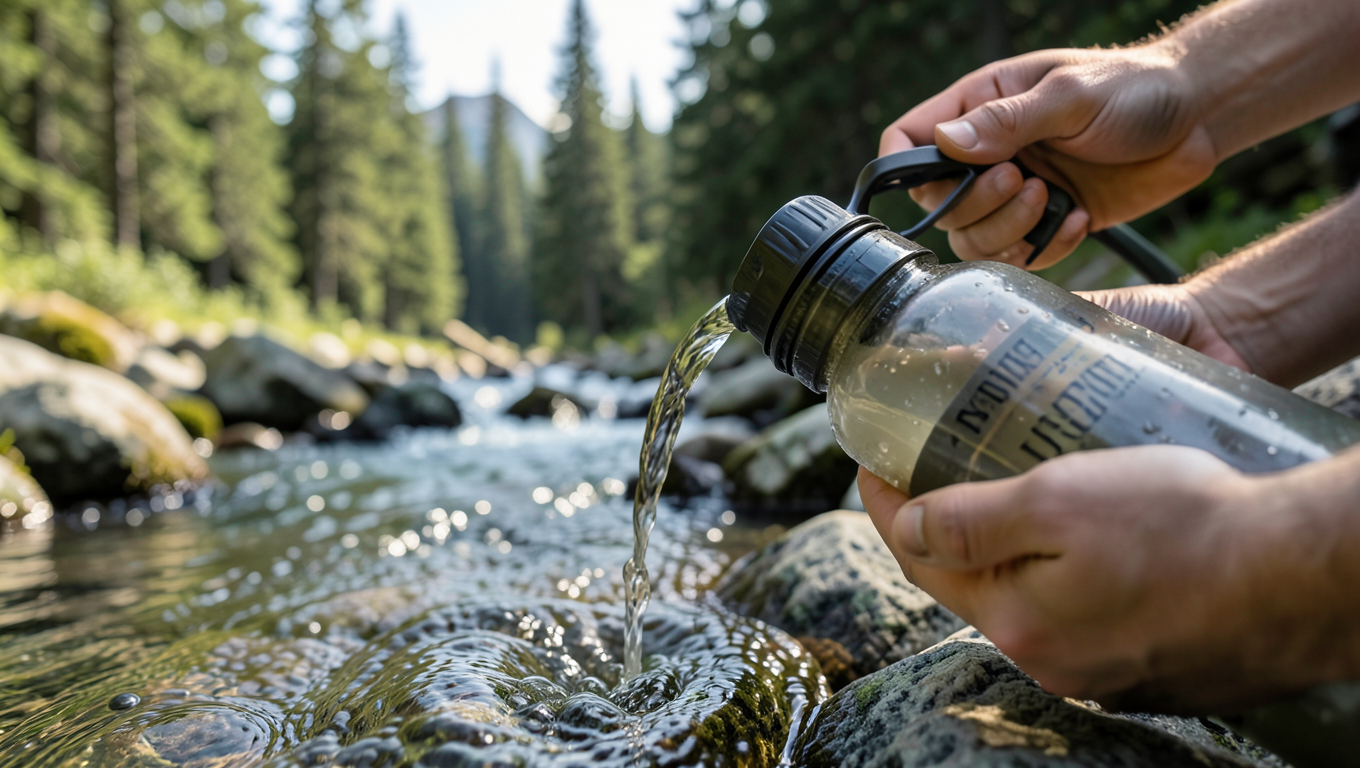
A water filter removes protozoa and bacteria through physical barriers. A water purifier does everything a filter does, plus it kills or inactivates viruses. That’s the core difference, and it determines which system you need.
Most North American backcountry water sources don’t require virus protection. Giardia, Cryptosporidium, and bacteria like E. coli are your primary threats, and a 0.2-micron filter handles them. But if you’re traveling internationally, dealing with water contaminated by human waste, or filtering in areas with high agricultural runoff, viruses become a real concern—and filters alone won’t protect you.
How Filters Work
Filters use physical barriers—hollow fiber membranes, ceramic elements, or pleated media—to block contaminants. The pore size determines what gets stopped. A 0.2-micron filter catches protozoan cysts (4-6 microns) and bacteria (0.5-3 microns) but lets viruses (0.02-0.3 microns) pass through.
I’ve used the Sawyer Squeeze on dozens of trips. It weighs 3 ounces, filters 100,000 gallons before replacement, and handles the sediment-heavy streams in the Rockies without clogging quickly. The flow rate drops when you’re pulling from silty water, but backflushing restores it in under a minute.
Filters excel at speed and convenience. You can drink immediately—no wait time, no chemical taste. The tradeoff is they don’t address dissolved chemicals, heavy metals, or viruses.
How Purifiers Work
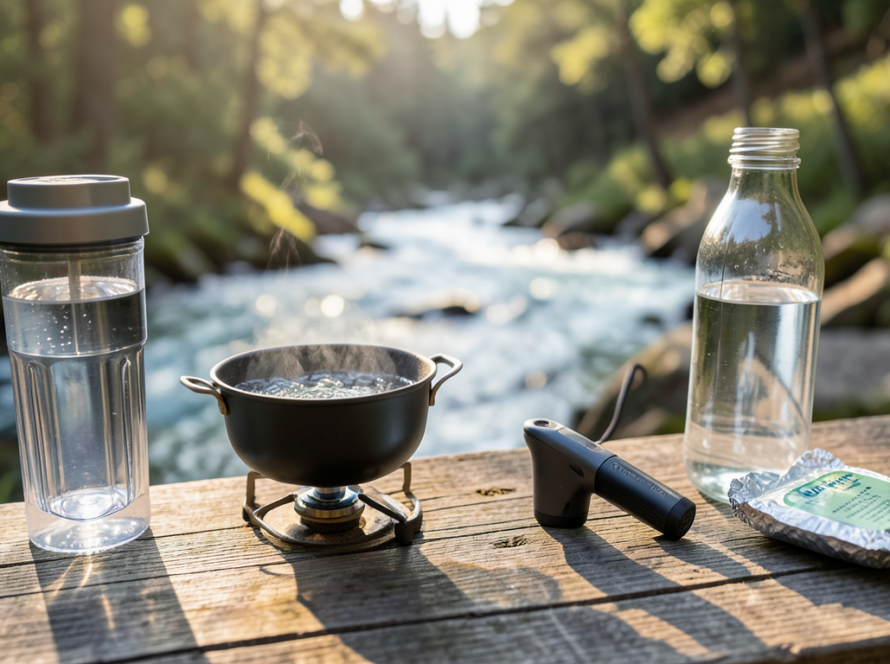
Purifiers combine filtration with a second treatment method: UV light, chemical additives, or electrochemical processes. The MSI Guardian uses hollow fiber filtration plus a self-cleaning mechanism, meeting NSF Protocol P248 for virus removal through mechanical means alone. The SteriPEN uses UV-C light to scramble viral DNA in 90 seconds per liter.
Chemical purifiers like Aquatabs or chlorine dioxide tablets (Aquamira, Katadyn Micropur) require 30 minutes to 4 hours of contact time depending on water temperature and clarity. I keep Aquamira in my kit for backup—two small bottles last years and weigh half an ounce combined.
Purifiers add complexity. UV systems need batteries. Chemical treatments need wait time and leave a slight taste. Combination devices weigh more and cost more. But in developing countries or after natural disasters when sewage systems fail, that virus protection isn’t optional.
Comparison Table
| Feature | Water Filter | Water Purifier |
|---|---|---|
| Removes Protozoa | Yes (99.9%+) | Yes (99.9%+) |
| Removes Bacteria | Yes (99.9%+) | Yes (99.9%+) |
| Removes Viruses | No | Yes (99.99%+) |
| Wait Time | None | Varies (0-4 hours) |
| Weight Range | 2-12 oz | 3-18 oz |
| Typical Cost | $30-$100 | $50-$150 |
| Power Required | No | Sometimes (UV models) |
| Best For | US/Canada backcountry | International travel, emergencies |
When You Need a Filter
Stick with a filter for wilderness trips in the US and Canada. The CDC reports no documented cases of waterborne viral illness from backcountry sources in these regions. Your threats are Giardia (causes diarrhea 1-2 weeks after exposure), Cryptosporidium (similar symptoms but harder to treat), and bacteria like Campylobacter.
I filter from alpine lakes, snowmelt streams, and spring sources without virus concerns. The exception: water sources near established campgrounds, trailheads with heavy human use, or anywhere you see toilet paper and waste. Human contamination introduces norovirus and hepatitis A risk.
Filters also make sense for weight-conscious backpackers. A 2-ounce filter does the job for 99% of North American conditions. Adding purification capability means extra weight, batteries, or wait time you don’t need.
When You Need a Purifier
Purifiers become essential in three scenarios. First, international travel to regions with inadequate sanitation—Southeast Asia, parts of Central and South America, Africa, and rural areas worldwide. Hepatitis A, norovirus, and rotavirus spread through fecally-contaminated water, and filters won’t stop them.
Second, emergency preparedness. After hurricanes, floods, or infrastructure failures, municipal water systems can become contaminated with sewage. I keep chemical purification tablets in my home kit specifically for this scenario.
Third, any situation where you’re filtering water downstream from human habitation. If you’re pulling from a creek below a village, near agricultural land with livestock, or anywhere septic systems might leak into groundwater, treat for viruses.
The Grayl GeoPress is my go-to for international trips. It purifies 24 ounces in 8 seconds of pressing, requires no batteries, and fits in a backpack side pocket. At 15.9 ounces, it’s heavier than a basic filter, but the speed and simplicity beat waiting 30 minutes for chemical tablets.
Combination Approaches
You can layer systems for maximum protection. I carry a Sawyer Mini (2 ounces) plus Aquamira drops (0.5 ounces) for a 2.5-ounce purification setup. Filter first to remove sediment and protozoa, then add chemical treatment for viruses if the source looks questionable. This costs under $40 total and handles any water scenario.
Some backpackers pre-filter turbid water through a bandana or coffee filter, then use UV or chemical purification. This extends the life of filter elements and ensures chemical treatments work effectively—high sediment loads can shield pathogens from UV light and reduce chemical effectiveness.
What Neither System Removes
Standard filters and purifiers don’t address dissolved contaminants. Heavy metals, pesticides, herbicides, and industrial chemicals pass through hollow fiber membranes. Activated carbon elements reduce these chemicals but require more frequent replacement and slower flow rates.
If you’re filtering near mining operations, agricultural areas with heavy pesticide use, or industrial sites, consider a system with activated carbon. The Platypus GravityWorks includes carbon in some models. MSR Guardian has no carbon element but meets military specs for global deployment.
Chemical taste from chlorine or iodine treatments bothers some people. Neutralizer tablets or vitamin C powder eliminate the taste after the required contact time. I’ve learned to tolerate the slight chlorine dioxide taste from Aquamira—it’s mild and reminds me the water is safe.
Get our free Water Filter Comparison Worksheet
Compare flow rates, weight, and protection levels across 20+ systems. Download the worksheet here.
FAQ
Can I use a water filter for international travel?
Not if you want virus protection. Filters remove bacteria and protozoa but let viruses pass through. In regions with poor sanitation—most of Asia, Africa, Central and South America—you need a purifier or chemical treatment to address hepatitis A, norovirus, and rotavirus in water contaminated by human waste.
Do I need to purify water from mountain streams in the US?
Filtering is sufficient for most backcountry sources in the US and Canada. Viruses aren’t a documented threat in wilderness water. Focus on removing Giardia, Cryptosporidium, and bacteria with a 0.2-micron filter. Purify only if you’re near heavy human use areas, campgrounds, or see signs of waste contamination.
How long do chemical purifiers take to work?
Contact time varies by product and water temperature. Chlorine dioxide tablets (Aquamira, Katadyn Micropur) need 30 minutes in warm water, up to 4 hours in cold or turbid water. Iodine tablets work in 30-35 minutes. UV purifiers like SteriPEN treat water in 90 seconds but require batteries and clear water for effectiveness.
What’s the difference between a 0.1-micron and 0.2-micron filter?
Both remove protozoa and bacteria effectively. The 0.1-micron rating provides a larger safety margin and may catch some larger viruses, but it doesn’t meet EPA purifier standards. Neither removes viruses reliably. The smaller pore size can reduce flow rate slightly. For practical backcountry use, 0.2-micron filters are the industry standard.
Can I combine a filter with chemical treatment?
Yes, and this creates an effective lightweight purification system. Filter first to remove sediment, protozoa, and bacteria, then add chemical treatment for viruses. This approach costs less than dedicated purifiers, weighs 2-3 ounces total, and handles any water scenario. Pre-filtering also makes chemical treatments more effective by removing particles that shield pathogens.