A 1000-lumen headlamp sounds impressive until you realize its beam barely reaches 50 meters. Meanwhile, a 400-lumen model throws light 150 meters downrange. The difference comes down to how manufacturers design the reflector and lens system—not just raw power.
Both specifications matter, but they measure completely different things. Lumens tell you total light output from the source. Beam distance tells you how far that light travels before it dims to moonlight levels (0.25 lux, technically). You need to understand both to match a headlamp to your actual needs.
What Headlamp Lumens Actually Mean
Lumens measure the total amount of visible light a source emits in all directions. A 100-lumen headlamp produces less total light than a 500-lumen model, but that doesn’t automatically make it less useful.
The lumen rating tells you about potential brightness, not how that brightness gets used. I’ve tested headlamps where 200 lumens felt blinding at close range for camp tasks, while 800 lumens seemed barely adequate for trail running because the beam pattern scattered everywhere.
Headlamp lumens meaning breaks down into practical ranges:
- 50-150 lumens: Reading, cooking, setting up camp, close-range tasks. Runs for hours on a single charge.
- 200-400 lumens: Hiking established trails, general outdoor work, searching your immediate area. Good balance of brightness and battery life.
- 500-1000 lumens: Off-trail navigation, fast-paced night movement, spotting distant landmarks. Burns through batteries quickly.
- 1000+ lumens: Search and rescue, caving, technical climbing. Typically runs at max output for under 2 hours.
Marketing departments love advertising peak lumens—the maximum output a headlamp can produce for maybe 30 seconds before it throttles down due to heat. I’ve measured headlamps that claim 1200 lumens but settle at 600 lumens after two minutes of use. Look for sustained output ratings when possible.
Beam Distance Explained
Beam distance measures how far light travels before it drops to 0.25 lux—roughly equivalent to a full moon’s illumination. At that point, you can technically see something, but you’re not getting useful light for navigation or identifying objects.
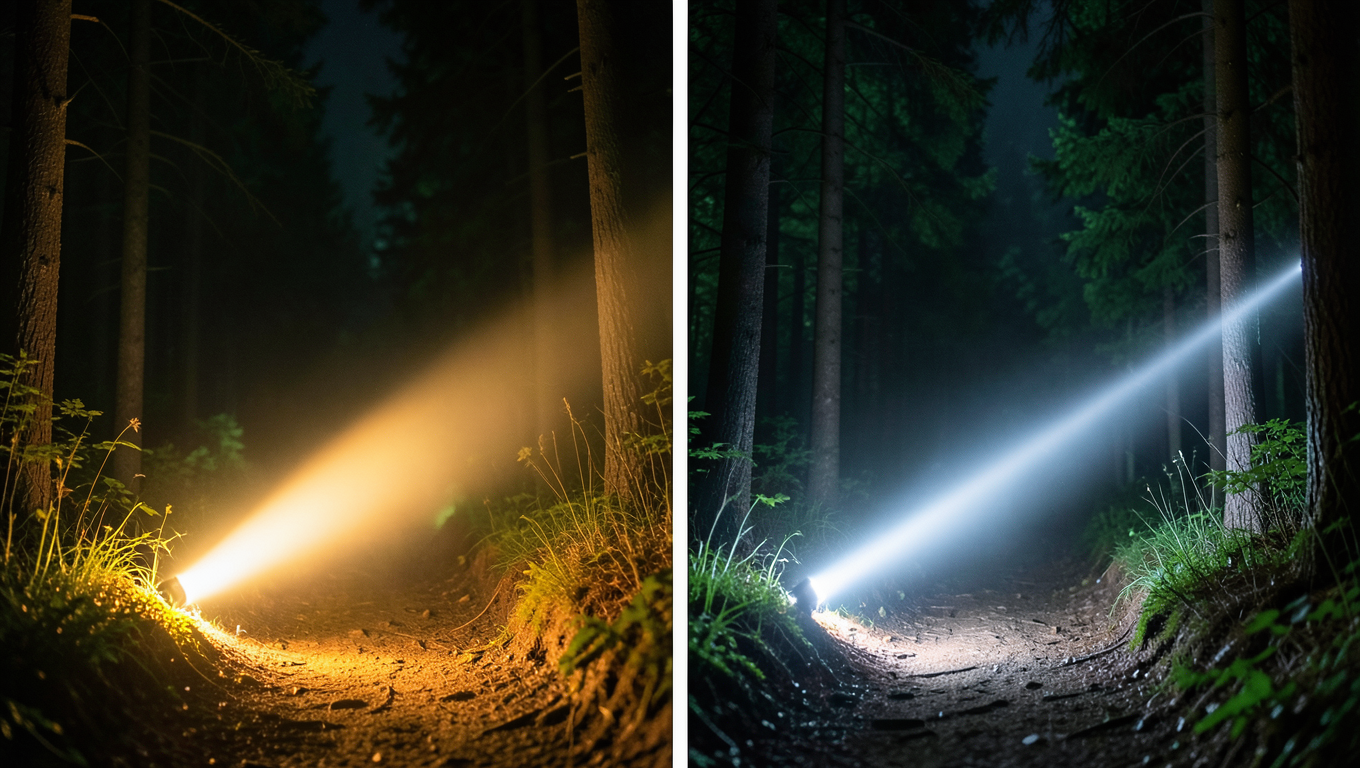
This specification depends entirely on optics. A focused reflector or TIR (Total Internal Reflection) lens concentrates light into a tight beam that reaches farther. A diffused lens spreads the same lumens across a wider area, reducing throw distance but improving peripheral vision.
Real-world beam distance performance:
- 50-75 meters: Adequate for camp use and slow hiking on marked trails. You see what’s immediately ahead.
- 100-150 meters: Comfortable for most hiking and backpacking. Lets you spot trail markers and obstacles with time to react.
- 150-200 meters: Preferred for trail running, off-trail navigation, and scanning terrain. You can plan your route several steps ahead.
- 200+ meters: Specialized use—mountaineering, search operations, large-scale terrain assessment. Overkill for most recreational users.
I’ve navigated technical terrain in Utah’s canyon country where beam distance mattered more than lumens. Spotting the next cairn 100 meters away required a focused beam, not a flood of light washing out my immediate surroundings.
The Reflector Makes the Difference
Two headlamps with identical LED chips and lumen outputs can have wildly different beam distances. The reflector shape, lens type, and optical design determine how light gets directed.
Smooth reflectors create a focused hotspot with longer throw. They excel at distance but leave your peripheral vision dark. Orange peel textured reflectors smooth out the beam, reducing throw distance but eliminating the harsh transition between bright center and dim edges.
Most modern headlamps use a combination approach—a central spot beam for distance and surrounding flood LEDs for close-range work. The Spot mode might hit 150 meters at 400 lumens, while Flood mode barely reaches 30 meters at the same power level.
This is why beam distance specifications matter more than lumens for certain activities. If you’re navigating off-trail at night, you need to see far ahead. If you’re working on gear repairs at camp, you need wide, even coverage at close range.
Matching Specs to Real Use
For camp tasks and close-range work, prioritize flood beam patterns over high lumens or extreme throw distance. I typically use 50-100 lumens with a wide beam for cooking, reading maps, and organizing gear. Anything brighter just destroys your night vision and blinds your companions.
Trail hiking on established paths works well with 200-300 lumens and 100-meter beam distance. You can see the trail surface clearly and spot markers without excessive battery drain. I’ve completed dozens of night hikes on this setup without feeling under-lit.
Off-trail navigation and trail running demand both higher lumens (400-600) and extended beam distance (150+ meters). You need to identify terrain features, spot obstacles early, and maintain pace. The battery trade-off is worth it when you’re covering ground quickly.
Technical activities—caving, mountaineering, search operations—justify 800+ lumens and 200+ meter throw. You’re working in complete darkness, often needing to illuminate large spaces or distant anchor points. Pack backup batteries or a secondary headlamp.
How Bright Should Your Headlamp Actually Be
Most people overestimate how much light they need. Your eyes adapt remarkably well to low light levels after 20-30 minutes. I’ve guided night hikes where participants insisted they needed maximum brightness, then voluntarily switched to low mode once their vision adjusted.
Start with the lowest setting that lets you see comfortably. You’ll extend battery life, preserve night vision, and avoid washing out your depth perception with excessive brightness. Save high-output modes for when you actually need them—navigating tricky terrain, searching for dropped gear, or signaling for help.
The “how bright headlamp” question depends on your specific activity, not a universal standard. A 150-lumen headlamp with good beam pattern beats a 1000-lumen model with poor optics for most recreational use. I’ve proven this repeatedly on multi-day trips where my lower-output headlamp outlasted brighter models that drained batteries in hours.
Understanding the Trade-offs
Higher lumens mean shorter runtime. A headlamp producing 1000 lumens typically runs 2-4 hours before the battery dies or output drops significantly. That same headlamp at 200 lumens might last 20+ hours.
Extended beam distance requires focused optics that narrow your field of view. You gain throw distance but lose peripheral awareness. This tunnel vision effect can be disorienting on technical terrain where you need to see your foot placement and the trail ahead simultaneously.
Weight and size increase with output capability. High-lumen headlamps need larger batteries, better heat management, and more robust LED assemblies. A 1500-lumen headlamp might weigh 200+ grams versus 80 grams for a 300-lumen model. That difference matters on long trips.
I carry a 400-lumen headlamp with 120-meter beam distance for most trips. It handles 90% of situations while keeping weight reasonable and runtime long. For specialized needs, I’ll upgrade or downgrade accordingly.
Quick Reference: Lumens vs Beam Distance
Lumens: Total light output from the source. Higher numbers mean more total light, but not necessarily better performance for your needs.
Beam Distance: How far light travels before dropping to 0.25 lux (moonlight level). Determined by optics and reflector design, not just lumens.
Camp Use: 50-150 lumens, 30-75m beam distance, flood pattern
Trail Hiking: 200-400 lumens, 100-150m beam distance, balanced beam
Technical Use: 500+ lumens, 150+ m beam distance, spot-focused beam
Want to keep your headlamp powered in the field? Download our free Power & Charging Quick Reference Guide for battery management strategies and backup power solutions.
FAQ
Do more lumens always mean a brighter headlamp?
More lumens mean more total light output, but not necessarily a brighter-looking beam. A 500-lumen headlamp with a wide flood pattern may appear dimmer than a 300-lumen model with a focused spot beam because the light is distributed differently. Beam pattern and reflector design affect perceived brightness as much as raw lumen count.
What’s more important for hiking at night—lumens or beam distance?
For established trail hiking, beam distance matters more. A headlamp with 300 lumens and 120-meter beam distance will outperform a 600-lumen model with 60-meter throw because you can see trail markers and obstacles farther ahead. Save high lumens for off-trail navigation or fast-paced movement where you need both distance and brightness.
Why does my headlamp seem dimmer after a few minutes on high mode?
Most headlamps throttle down output after 1-3 minutes to prevent overheating. The advertised peak lumens represent maximum output that can’t be sustained. Quality manufacturers list both peak and sustained output ratings. This thermal regulation protects the LED and battery but means your 1200-lumen headlamp might actually run at 600-700 lumens continuously.
How many lumens do I need for camping?
For typical camp tasks like cooking, reading, and organizing gear, 50-150 lumens is plenty. Higher outputs destroy your night vision and drain batteries quickly. I use 75 lumens for most camp work and only switch to 200+ lumens when hiking between campsites or searching for something in the dark. Your eyes adapt to lower light levels within 20-30 minutes.
Can a headlamp have high lumens but short beam distance?
Yes, this happens with flood-focused designs. A headlamp might produce 800 lumens but only achieve 50-meter beam distance because the light spreads across a wide area instead of focusing into a tight beam. These designs work well for close-range tasks where you need even illumination across your entire field of view, like working on vehicle repairs or setting up camp.